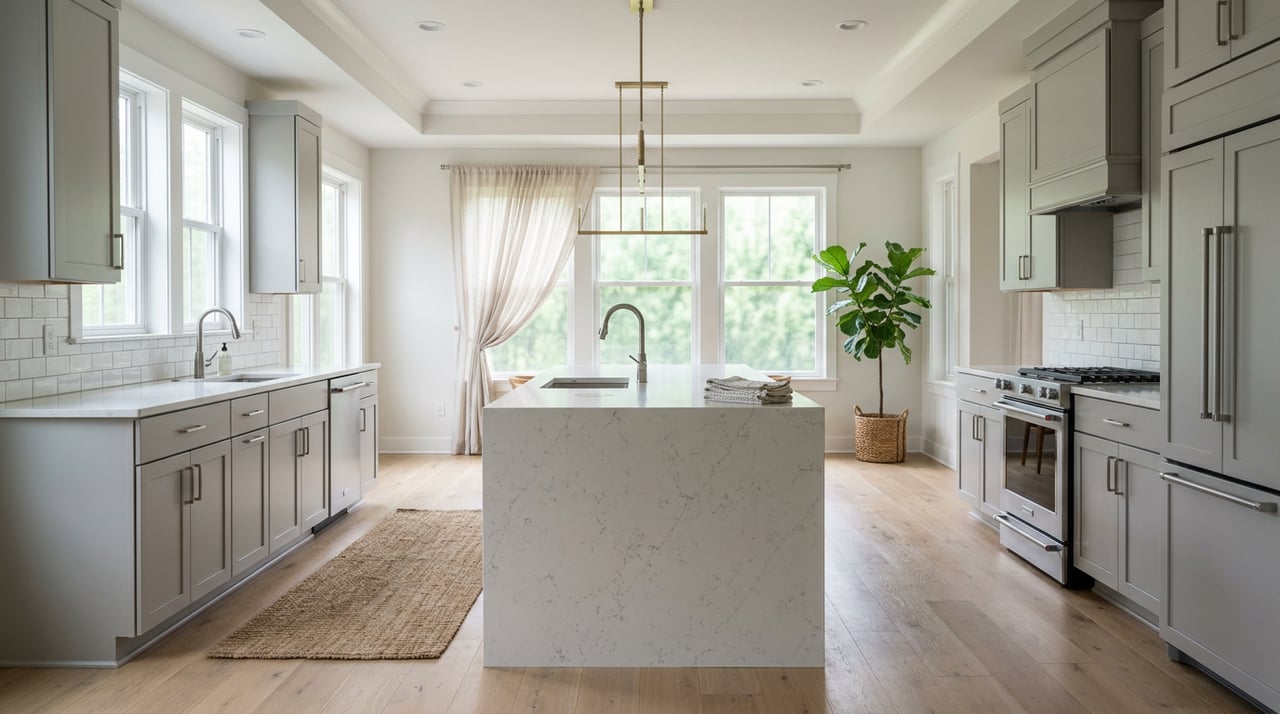
There is, as of this writing, one new single-family lot left to build on in Tuscarora Creek East. DRB Homes has been marketing it plainly: an undecorated field model on Reagans Road, the last new single-family home available in the community. The original phase next door, simply called Tuscarora Creek Single Family Homes, already sold out completely. Multiple listing aggregators now describe the newer phase as nearly gone, framed as a final opportunity rather than an open invitation.
If you're shopping Frederick right now, the instinct is obvious: scarcity means price pressure, so the last new home in a popular community should cost more, not less, than what came before it. That instinct is wrong here, and understanding why tells you something useful about how to shop this neighborhood over the next few months.
The Incentive Stack Behind the "Last New Home"
DRB didn't let that final lot sit on price alone. The listing itself notes the incentive is already reflected in the price, and it sits under the builder's standing DRB Advantage program, which advertises up to $20,000 in Flex Cash and rate buydowns quoted as low as 3.99 percent (7.040 percent APR) across its Tuscarora Creek East inventory. Stack a five-figure cash allowance and a rate buydown onto one home, and the number on the listing sheet stops being the number the buyer actually pays.
This matters because a builder closing out a community isn't pricing to what the last lot is worth in isolation. It's pricing to close the file. DRB has already built the clubhouse, the pool, the trails and the tot lot that make Tuscarora Creek East marketable. Those sunk costs are spent whether that last lot sells this month or next spring. The incentive stack exists to move inventory off the builder's balance sheet, not to capture a scarcity premium from the buyer.
What the Two-Year-Old Resale Down the Street Is Really Selling
At the same time, a resale has been circulating in the same community: a two-year-old DRB-built home, roughly 4,000 finished square feet, with a main-level owner's suite, marketed as a rare chance to skip the wait and the inconvenience of building new. On paper, that pitch sounds like it should command a premium over new construction. In practice, that seller isn't offering a rate buydown. There's no Flex Cash, no builder-funded closing credit stacked on top of the price. The homeowner selling that resale has one house to move and no institutional reason to discount it the way a builder closing out a subdivision does.
That's the piece easy to miss if you're only comparing sticker prices side by side. A new lot advertised at one number, with tens of thousands in incentives layered underneath, can land at a lower effective cost than a resale priced to look competitive on its own. Or it can land higher. You don't know until you ask both sellers the same question: what does this actually cost after everything that's attached to the price gets accounted for.
Why the Builder Is in a Hurry and the Neighbor Isn't
This is the part worth sitting with. A builder finishing a project has a calendar and a lender behind it. Every month a model home or a spec lot sits unsold is carrying cost, and DRB's incentive structure is built to solve that problem on the builder's timeline, not the buyer's. An individual owner selling a two-year-old resale has no comparable deadline. They can wait for their number. Neither seller is being unreasonable. They're responding to two entirely different sets of pressure, and that difference is exactly what shows up in the price you're quoted.
For a buyer, this is useful leverage in both directions. If you're looking at that last new lot, the incentive stack is a starting point for negotiation, not the final offer. If you're looking at the resale next door, the builder's own concessions on a comparable home give you a benchmark for what the market will actually bear, even if the resale seller hasn't offered anything close to it yet.
The Median Everyone's Quoting Isn't the One That Applies Here
There's a second layer to this that trips up buyers comparing Frederick numbers online. Over the three months ending June 2026, Frederick County's median sale price ran $514,000, up 4.4 percent year over year. That's the number that shows up in most county-level market write-ups, and it's easy to read as "Frederick is appreciating quickly."
But Tuscarora Creek East carries a Frederick, MD 21702 address, the same zip code the city-level data covers, and that number over the same window tells a different story:
| Geography | Median sale price (3 mo. ending June 2026) | Year-over-year change |
|---|---|---|
| Frederick County | $514,000 | +4.4% |
| City of Frederick | $442,000 | -0.43% |
The county figure is being pulled up by growth elsewhere, not by the city itself. If you're pricing a new lot against a resale in this same zip code, the county's 4.4 percent story isn't the backdrop you're actually operating in. The city's flat-to-slightly-down number is closer to it. That changes how much appreciation cushion you should assume is baked into either seller's asking price, and it's a good reason not to let a headline county statistic set your expectations for this specific pocket of Frederick.
How to Price the Comparison Correctly
If you're weighing that last new lot against a nearby resale, a few questions get you to the real number faster than comparing list prices:
- Ask the builder's sales office for the total value of every incentive attached to the lot right now, not just the headline credit.
- Ask what the rate buydown is worth over the life of the loan you'd actually use, not the teaser rate quoted in marketing copy.
- Ask a resale seller directly whether they'd consider a closing-cost credit or rate assistance to compete with what the builder is offering across the street. Many haven't been asked.
- Weigh the city-level price trend, not the county figure, when you're deciding how much room you have to negotiate on either option.
None of this means the last new lot is automatically the better deal, or that the resale is overpriced. It means the two numbers aren't directly comparable until you've adjusted for what's actually being offered underneath each one.
Tuscarora Creek East is a small enough community that this kind of detail is knowable street by street rather than guessed at from a countywide chart. If you're trying to work out what a specific lot or a specific resale here actually costs once every incentive and every local price trend is accounted for, that's the kind of comparison The Trish Mills Team runs for buyers before they write an offer. Reach out and we'll walk through the real numbers with you, side by side, before you decide which one makes sense.